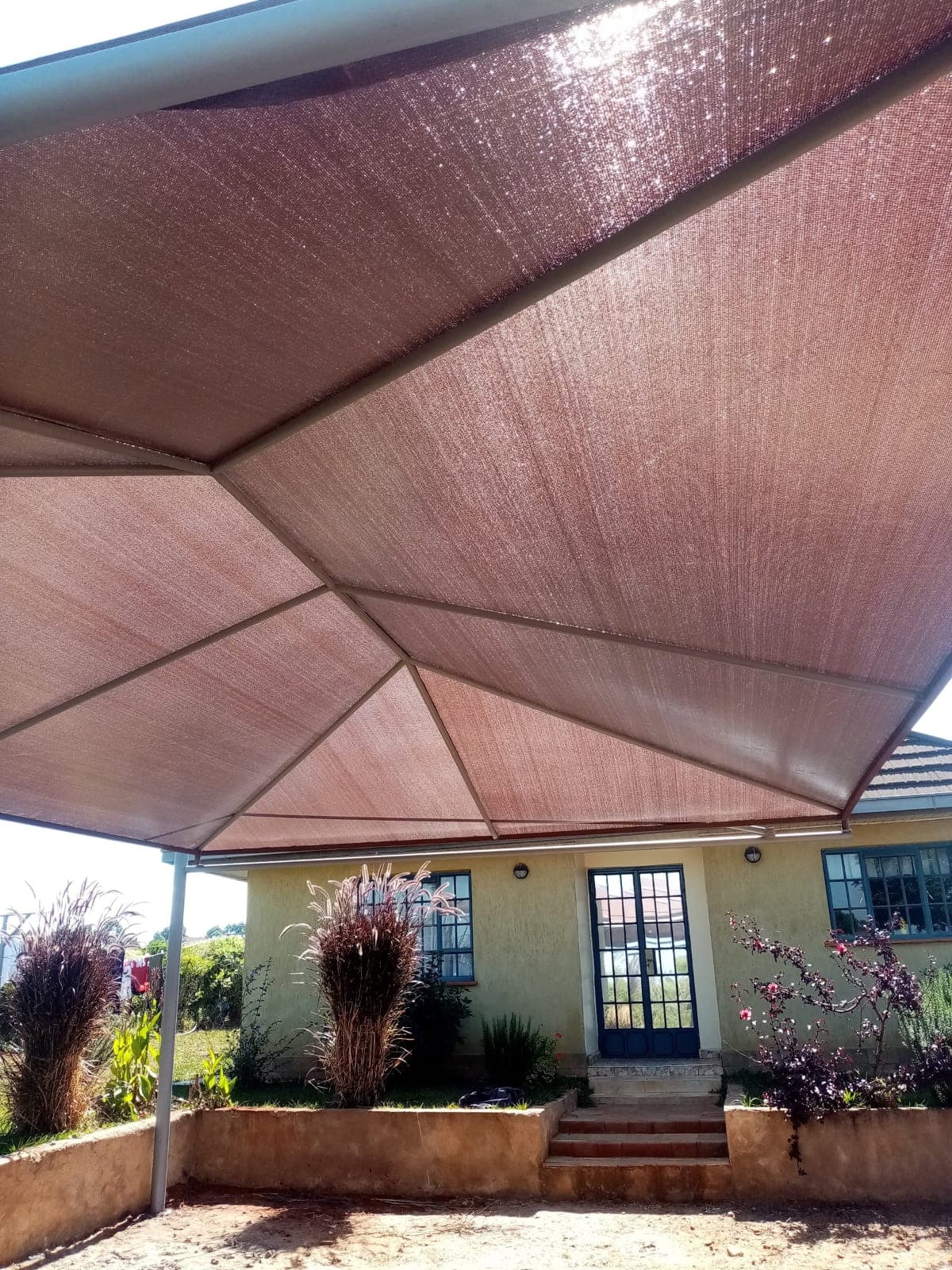
Shade structures look simple: some posts, some fabric, done. That simplicity is exactly why so many bad assumptions survive long enough to become conventional wisdom. Here are five we hear constantly, and why each one costs people money the moment reality disagrees with the myth.
Myth 1: "Any shade net gives the same protection"
Shade nets are sold by density, and density is not a cosmetic spec, it's the entire point of the product. A 40% windbreak cloth and a 100% shade net are built for different jobs entirely: one cuts wind and dust along a boundary, the other blocks nearly all direct sunlight. Put a 40% cloth over a car parking bay expecting full UV protection and you'll get filtered sun, not blocked sun.
Density also isn't the only variable. Two nets both labelled 75% shade can come from different manufacturers with very different UV stabiliser content, and the cheaper one will visibly fade, stiffen, and start shedding fibres years before the better one does, even at the identical percentage rating.
Myth 2: "Shade structures don't need engineering for wind"
A shade structure isn't a static weight sitting on the ground, it's closer to a sail. A large tensioned fabric roof catches wind load across its entire surface area and transfers that force down through the steel frame into the footings. Underspec the footing depth or the post gauge and the first serious gust, not even a storm, just an unusually strong afternoon wind, can rack the frame or pull a footing loose.
Reputable fabricators engineer car parking shades for sustained winds in the 80-100 km/h range, which covers the wind speeds Kenya sees outside of genuinely exceptional weather events. That's not overkill, that's the baseline for a structure meant to stand for a decade in the open.
Myth 3: "Cheap fabric lasts just as long as premium fabric"
Standard imported shade fabric and premium South African-manufactured fabric can look near-identical on the roll. The difference shows up under sustained equatorial UV exposure, which is a harsher test than most shade fabric specs were originally written for in cooler markets. Lower-grade fabric loses tensile strength and colour faster, which means earlier sagging, earlier tearing at the eyelets, and a replacement job years sooner than the premium option.
This doesn't mean budget fabric is a bad choice, plenty of buyers deliberately choose it to bring costs down and accept a shorter lifespan. The myth is thinking there's no trade-off at all.
Myth 4: "Privacy nets and solid walls give the same result"
A knitted HDPE privacy net blocks sightlines while letting air move through the weave. A solid wall blocks sightlines and airflow. On an exposed rooftop, a pool deck, or a compound in a hot lowland area, that airflow difference is the whole reason someone picks a net over a wall in the first place. Treating the two as interchangeable misses why the product exists.
See real examples of this on our privacy nets service page , including a rooftop pool installation in Nyali where airflow was the deciding factor.
Myth 5: "Once it's up, a shade structure needs no more attention"
Fabric tension loosens slowly over years of thermal expansion and contraction. Bolts and clips work loose under repeated wind flex. A structure that was correctly installed can still develop sag, fraying at stress points, or a loose footing over time, none of which announce themselves until the fabric tears in a storm or a post shifts visibly. A once-a-year visual check, tension, fraying, footing stability, catches most of this before it becomes a repair instead of a glance.
None of these myths are exotic. They're the kind of assumptions that feel reasonable right up until the specific failure mode they ignore actually happens. Ask about density, ask about wind engineering, ask which fabric grade is on the quote, and you've already avoided most of what goes wrong with shade structures in Kenya.
Not sure what your property actually needs?
Book a free site survey. We'll assess wind exposure, recommend the right density and fabric grade, and give you a straight answer, not a sales pitch.
Book Free Survey