Two comparisons come up constantly in shading conversations, and they get confused with each other more often than you'd expect. One is about how much sun a net blocks. The other is about whether your boundary should hide what's behind it or let people see through. They're unrelated decisions, so let's take them one at a time.
Comparison One: 75% Shade Density vs 100% Shade Density
Shade net density is a straightforward spec: the percentage of direct sunlight the knit blocks. But the right number depends entirely on what's underneath it, and picking the denser option by default isn't always the right call.
Blocks the majority of direct UV while still letting meaningful light and airflow through the weave. Good fit for carports, yards, livestock shelters, and anywhere you want strong sun reduction without a fully dim result underneath. Elatec's Green Shade Net 75% Palmer rolls (3m x 50m) run KES 75,000.
Near-total light block, minimal filtered sun getting through. Best where full sun protection matters more than natural light underneath, extended vehicle cover in intense sun zones, or sensitive plant nurseries. Elatec's Green Shade Net 100% SA (3m x 50m) runs KES 150,000, reflecting its South African fabric grade and denser knit construction.
The price gap here isn't just density, it's also fabric origin, the 100% option is SA-manufactured with the UV stabilisation advantages that come with that grade. If your priority is airflow underneath (a car park, a seating area) the 75% option is often the better real-world choice even where budget isn't the constraint, because full-density knits can trap heat underneath on genuinely still days. If you're covering something that needs maximum protection with airflow being a secondary concern, the 100% option earns its price.
Comparison Two: Privacy Nets vs Clear-View Fencing for Boundary Walls
This comparison isn't about density at all, it's about whether you want your boundary to conceal or to let people see through it, and those are genuinely opposite design goals serving different security philosophies.
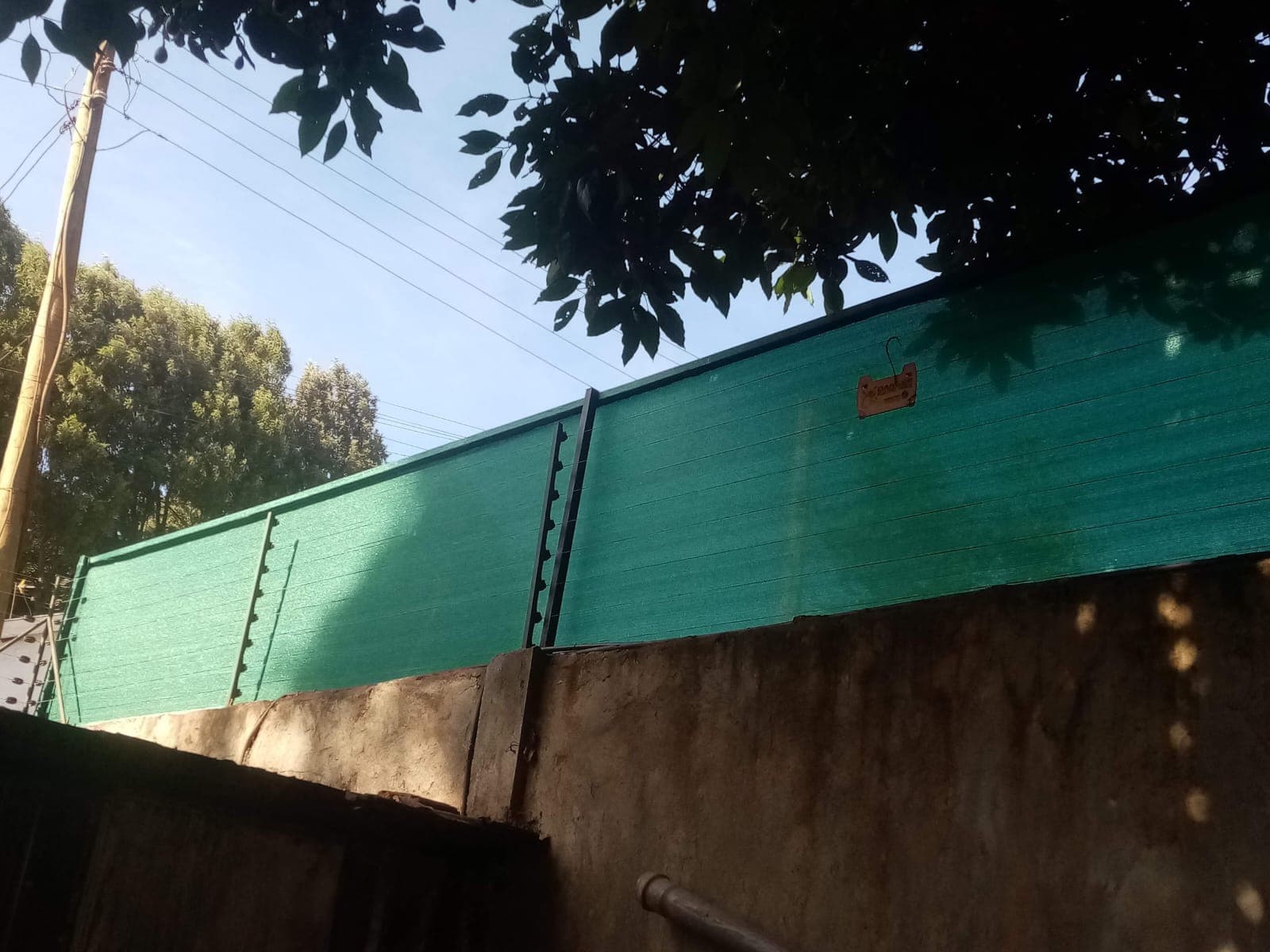
Privacy nets, typically 95% or 70% density knitted HDPE mesh, are about visual screening. They stop passers-by, neighbours, or anyone outside the property from seeing in, while still letting air move through the weave, unlike a solid wall. They're commonly fitted along existing chain-link or palisade fencing, over pool decks, and around construction sites where screening what's happening on-site matters.
Clear-view fencing, also called 358 mesh or anti-climb fencing, does the opposite on purpose. The 76.2mm x 12.7mm aperture welded mesh panel is difficult to climb and difficult to cut, but it's fully see-through. The security logic here is that visibility is itself a deterrent and an asset: security personnel, cameras, and passing patrols can see both sides of the fence line, which makes it much harder for anyone to approach or work at the boundary unnoticed compared to a solid wall or dense screen.
- •Choose privacy screening: If your priority is concealing activity, sightlines, or people on your property from the street or neighbours.
- •Choose clear-view fencing: If your priority is maximum physical security with visibility as an active advantage, common on commercial and institutional perimeters.
- •Combine them selectively: Some properties run clear-view mesh for security with a privacy net fitted only along specific sections, pool decks, private garden areas, rather than the full perimeter.
See real installation photos and full specifications on our privacy nets and
clear-view fence service pages, including a 358 mesh installation in Karen and a rooftop pool privacy screen in Nyali.
Both comparisons come down to the same underlying question: what do you actually need this structure to do, block sun, block sightlines, or maximise visibility for security? Answer that first, and the right density or fencing type follows naturally.
Not sure which option fits your property?
Book a free site survey and we'll assess your specific sun exposure, airflow needs, and security priorities before recommending anything.
Book Free Survey