Fuel goes up. Electricity tariffs go up. Rent goes up. Against that backdrop, it's a genuinely unusual thing to say that a piece of hardware has been getting cheaper for the better part of a decade, but that's the honest trend with lithium battery storage and solar panels, and it changes the calculation for anyone who's been putting off a backup system waiting for prices to drop further, or assuming they never will.
Why Lithium Battery Prices Have Fallen
Global lithium-ion battery cell production has scaled enormously over the past decade, driven largely by electric vehicle manufacturing. That scale has pulled down manufacturing costs across the board, including for the LiFePO4 chemistry used in solar storage batteries, which shares production infrastructure with EV batteries even though the specific cell design differs. Kenya, as an importer, has benefited directly from this global cost curve.
At the same time, competition among battery brands supplying the Kenyan market has intensified. We source lithium batteries from 14 established manufacturers including SRNE, Felicity, Must, Deye, Dyness, and BYD, and that breadth of supply keeps pricing competitive in a way that wasn't true when only two or three brands had meaningful local distribution.
Why Solar Panel Prices Have Fallen Even Further
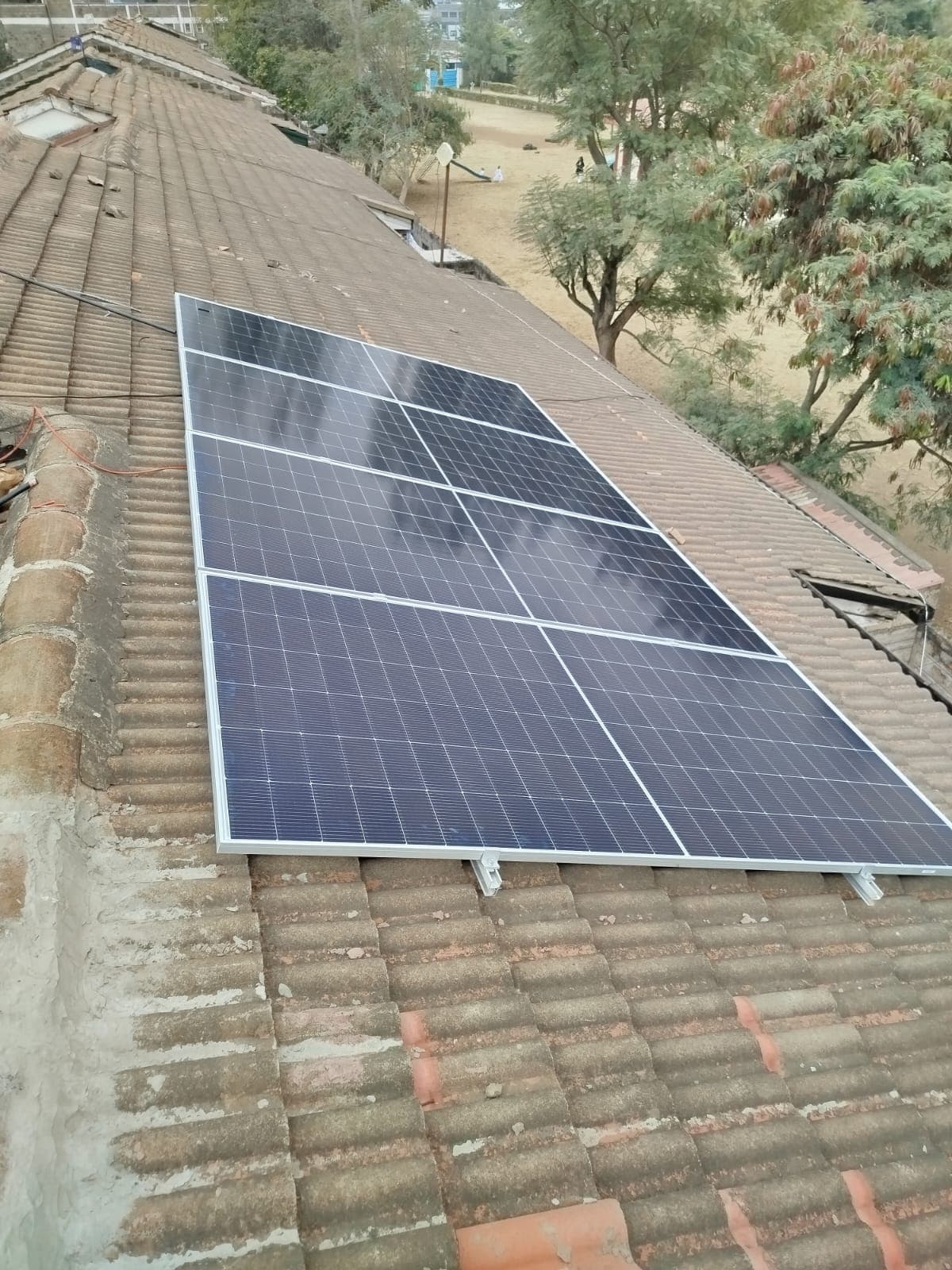
Monocrystalline panel manufacturing has seen some of the steepest cost declines of any energy technology globally over the last 15 years, driven by manufacturing scale, improved silicon wafer efficiency, and intense competition among Tier-1 manufacturers. Panels from Jinko Solar, JA Solar, Longi Solar, Canadian Solar, and Trina Solar, the Tier-1 brands we install, are now priced from around KES 19 per watt in Kenya, a figure that would have looked implausible a decade ago.
What's Driving Kenya's Push Toward Renewables Specifically
Kenya's grid already draws heavily on geothermal and hydro, but transmission and distribution reliability, not generation capacity, is the more common source of the outages households and businesses actually experience. That gap between generation and reliable delivery is precisely where behind-the-meter solar backup fits: it doesn't require the national grid to change at all, it gives individual homes and businesses a way to insulate themselves from the parts of the system they can't control.
Combine that reliability motivation with falling hardware costs and rising KPLC tariffs, and the payback period on a solar backup or water heating investment has been shrinking from both directions at once: cheaper to install, more expensive not to.
What This Means If You've Been Waiting
- •Waiting for prices to fall further has diminishing returns: The steepest cost declines in battery and panel manufacturing have already happened; further drops are likely to be incremental, not dramatic
- •Tariffs move the other direction: Every year you wait, the electricity cost baseline you're comparing solar against typically increases
- •Installed system pricing reflects the falling hardware cost already: Our 3kW to 12kW system tiers, from KES 179,000 to KES 520,000 fully installed, are priced against current hardware costs, not costs from several years ago
If you want to see what current pricing actually buys, our solar backup systems pricing breaks down each tier, or browse individual panels, batteries, and inverters directly in our
solar equipment shop if you want to compare component pricing yourself.
None of this means prices won't move at all, currency fluctuations and import costs will always introduce some variability. But the underlying manufacturing trend has been consistently downward for long enough that it's a reasonable basis for planning, not just an optimistic guess.
See what today's pricing gets you
Book a free site survey for a quote based on current hardware costs and your actual load requirements.
Book Free Survey