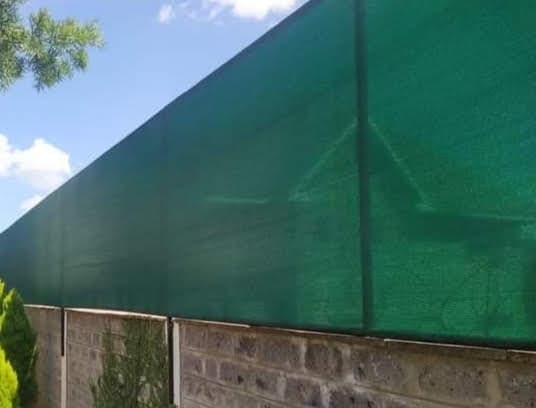
A shade net doesn't fail with a bang. It fails the way most outdoor materials do, gradually, a little more each dry season, until one day you notice the car underneath is basically sitting in direct sun again and you genuinely aren't sure when that started. Here's what to check.
1. Visible fading or colour shift
UV-stabilised HDPE fabric is built to resist fading, but the stabiliser package depletes over years of sustained sun exposure, and once it does, the fabric fades faster and loses tensile strength alongside it. A shade net that's gone from deep green to a chalky, washed-out tone isn't just cosmetically tired, that colour change is a proxy for UV protection you're no longer fully getting.
2. Sagging that wasn't there before
Fabric tension loosens over time as the material stretches under repeated thermal cycling and wind flex. A net that used to sit taut and flat and now visibly bows or ripples in the middle has lost tension, which also means it's catching more wind load unevenly and putting extra strain on the eyelets and fixing points at the edges.
3. Small tears or fraying at the eyelets
The eyelet points, where the net is tensioned to the frame, take the most repeated stress of anywhere on the structure. A small tear starting at an eyelet doesn't stay small, wind load concentrates at the point of failure and a minor fray this season is often a significant tear by next season if it's not caught and reinforced early.
4. You can feel more direct sun underneath than you remember
This is the most subjective sign but often the most reliable one. If you or your car are noticeably hotter standing under the shade than you remember from a year or two ago, the fabric's blocking percentage has likely degraded from its rated density, even without an obvious visible tear. Fabric doesn't have to fail structurally to fail functionally.
5. It's simply been ten-plus years
Quality 200GSM HDPE shade cloth with proper UV stabiliser typically lasts 10-15 years in Kenyan conditions, standard privacy netting tends to run 5-10 years. If your structure has quietly passed that window without any obvious issue, it's worth a proper inspection rather than assuming it'll keep going indefinitely. Materials that have held up well for a decade are also the ones most likely to fail without warning right at the end of their service life.
None of these signs alone necessarily means a full replacement. Re-tensioning can fix early sagging, a small tear can sometimes be patched or reinforced at the eyelet rather than requiring a whole new fabric panel. But catching these early is the difference between a minor repair and discovering the problem when the fabric finally lets go in a storm.
Browse current shade net and fabric options, including 75% and 100% density rolls, in our shading shop , or get a proper assessment of your existing structure.
Not sure if your shade net needs replacing?
Book a free site survey and we'll assess your existing fabric, tension, and frame condition honestly, replacement isn't always the answer.
Book Free Survey