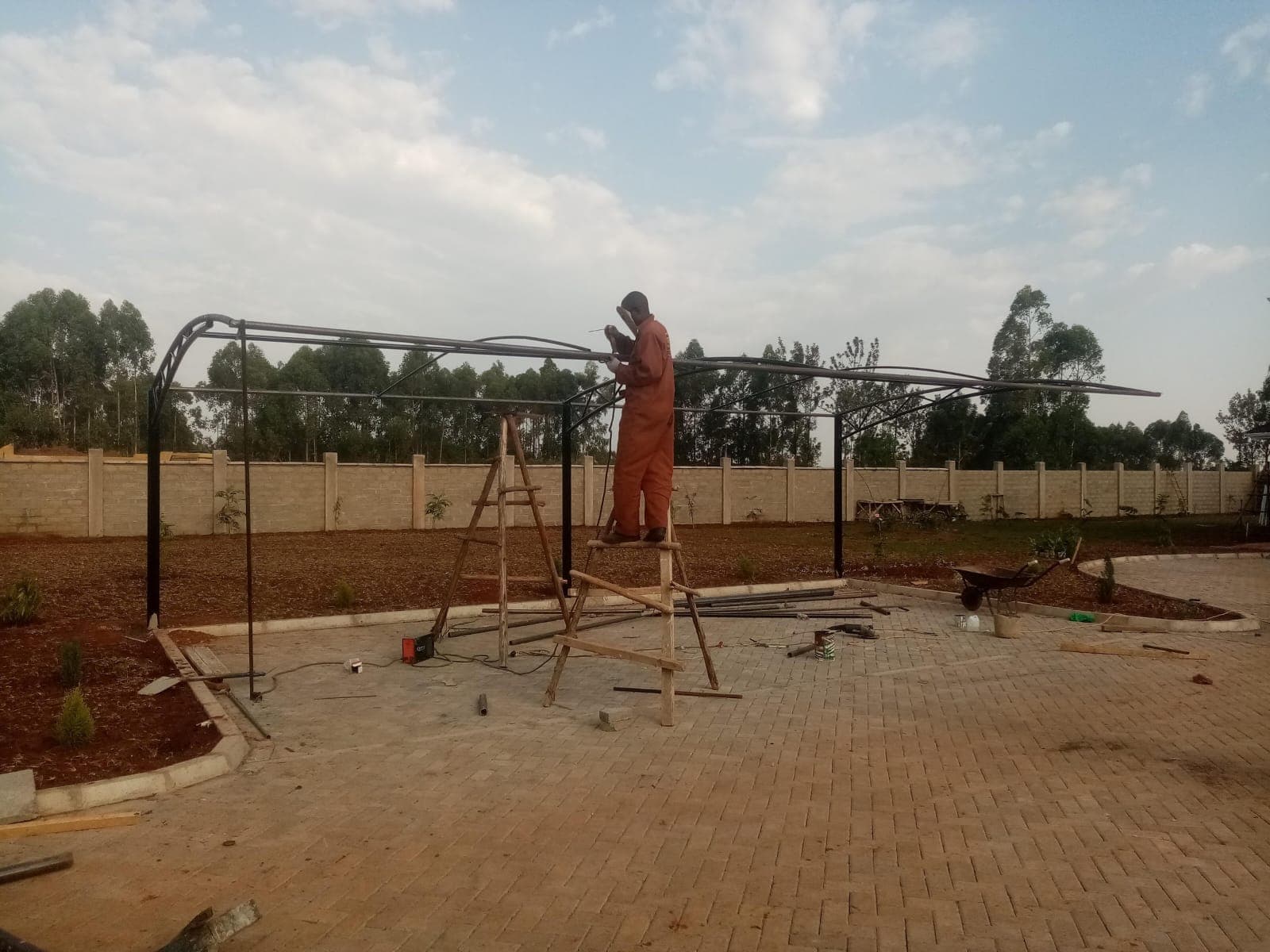
Shade structures are deceptively simple-looking, which means it's easy for a fabricator to hand you a low number and a vague scope, and for you to only find out what was missing once the structure is up (or worse, once it isn't standing after the first bad storm). These six questions surface the gaps before you've paid for anything.
1. What fabric grade and GSM is actually in this quote?
"Shade cloth" is not a specification. Standard car parking structures use 200GSM HDPE cloth, and there's a real, priced difference between premium South African-manufactured fabric and standard imported fabric, roughly KES 20,000-25,000 per structure depending on bay count. If the quote doesn't name the grade, ask directly, and ask what happens to the price if you specify the other one.
2. What wind speed is the structure designed for?
A properly engineered structure has a design wind speed behind the post gauge, cross-bracing, and footing spec, typically sustained winds of 80-100 km/h for structures in Kenyan conditions. If a fabricator can't answer this or looks confused by the question, that's a strong signal the frame was sized by eye rather than calculation.
3. How deep are the footings, and how were they sized?
Footing failure, not fabric tearing, is the most common cause of a shade structure coming down in wind. Footing depth should be calculated from post spacing, structure height, and design wind load, not applied as a fixed default regardless of the structure's size. Ask what the footing spec is for your specific structure, not a generic answer.
4. Is this a cantilever or post-supported design, and why?
Cantilever designs keep support posts clear of the parking bays but cost more because the angled bracing has to resist a bending moment rather than carry load straight down. If usability under the structure matters to you (tight driveways, turning circles), make sure you understand which design you're getting and why it costs what it costs.
5. What's actually included, and what's an extra?
- •Gutters and downpipes: Often an optional add-on, not standard, confirm before assuming rainwater is handled.
- •Custom colours: Standard fabricators stock a set palette; branded or non-standard colours can mean a lead time or cost premium.
- •Site preparation: Excavation, concrete, and disposal of spoil should be explicitly listed, not assumed.
- •Council approvals: Permit requirements vary by county and structure size, ask who's responsible for handling this.
6. Can I see photos of a structure you've actually built?
Renders and stock photography are easy to produce and prove nothing about a fabricator's actual work. Ask for photos of completed structures, ideally including the frame stage before the fabric went on, which tells you far more about weld quality and steel gauge than a finished shot ever will.
You can see exactly this kind of build documentation, frame through to finished structure, across our completed shading projects , including cantilever structures in Malindi, Nairobi, Nakuru, and Kitale.
None of these six questions are unreasonable to ask, and a fabricator who's actually engineered your structure will have straight answers ready without hesitating. If you get vague answers, evasive answers, or a slightly irritated "why does that matter," treat that as the answer.
Get straight answers before you commit
Book a free site survey. We'll walk you through fabric grade, wind design, and footing spec in writing, no vague quotes.
Book Free Survey