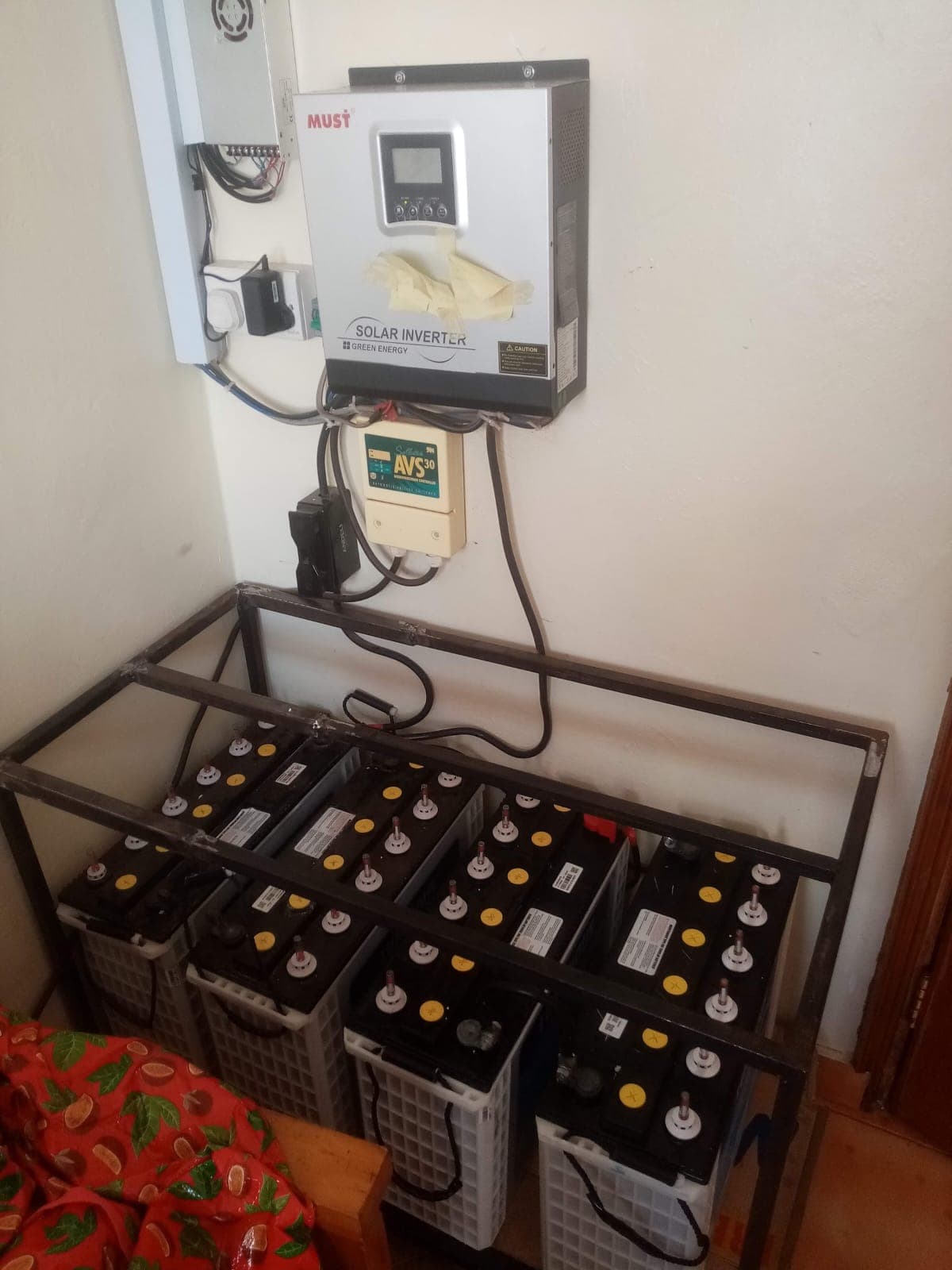
Two numbers decide whether a solar backup system actually does what you need: the inverter's kVA rating and the battery's kWh capacity. Suppliers who quote you a system size without walking through both, based on your actual loads, are guessing, or worse, upselling. Here's the maths in plain language.
kVA: Can the Inverter Handle What You Switch On at Once?
kVA (kilovolt-amps) measures the inverter's capacity to deliver power at a given moment, essentially, how much load it can carry simultaneously. This is the number that determines whether your lights dim or your inverter trips when the fridge compressor and the kettle happen to switch on at the same time.
To size this correctly, list every appliance you want on backup and its running wattage, then add roughly 20-30% headroom for the surge current that motors (fridge compressors, pumps) draw at startup, which is higher than their running wattage. A rough household example: LED lighting (100W), router and TV (150W), fridge (150W running, 450W startup surge), a few phone chargers and a laptop (100W). Add it up, apply headroom, and you're comfortably inside a 3kVA inverter's capacity. Add a washing machine or an electric kettle and you're pushing toward 5kVA.
kWh: How Long Can You Run on Battery Alone?
kWh (kilowatt-hours) measures stored energy, how long your loads can run before the battery is depleted. This is a completely separate question from kVA. A 5kVA inverter with a small 5kWh battery can handle a high momentary load but will run out of stored energy quickly. A 3kVA inverter paired with a 10kWh battery handles lower simultaneous load but keeps running much longer.
To estimate this, take your total load in watts, convert to kW, and multiply by the hours you want covered. Using the household example above (roughly 500W of average running load, ignoring surges), running for 10 hours needs 5kWh of usable capacity. Because you generally don't want to fully discharge a battery (lithium systems are typically sized with a usable depth of discharge around 80-90%, gel much lower), you'd want a battery rated somewhat above that raw figure.
Real System Sizing, Grounded in Actual Pricing
Elatec's installed solar hybrid backup systems range from 3kW to 12kW, priced from KES 179,000 for a 3kW system up to KES 520,000 for a 12kW system, all fully supplied and installed with panels, lithium battery, mounting structure, cabling, and protection devices included. The jump in price between tiers reflects both a larger inverter (higher kVA) and a larger battery bank (higher kWh), which is why two systems with the same kW inverter rating can have very different running times depending on the battery fitted.
Suited to essential circuits: lighting, router, TV, phone charging, a small fridge. Typical for a small home or apartment.
Handles a full household including a washing machine or electric kettle used sparingly, plus everything in the 3kW tier.
Suited to larger homes or small commercial premises running multiple heavier appliances simultaneously.
For offices, clinics, or rental properties with three-phase supply and higher simultaneous demand.
Why Undersizing Is the Most Common Mistake
The most frequent sizing error we see isn't overspending, it's underspending on the battery to hit a lower headline price, then discovering the system only covers 3 to 4 hours of the outage duration the household actually experiences. A system that trips or runs flat halfway through a long outage delivers a worse experience than not having one, because you've paid for reliability you didn't get.
- •Ask for the load list first: Any competent installer sizes from your actual appliances, not a generic package
- •Confirm usable kWh, not rated kWh: A battery's usable capacity is lower than its rated capacity once depth of discharge is factored in
- •Check surge handling: Motor startup surges can be 2-3x running wattage; an undersized inverter trips exactly when you need it most
- •Plan for growth: Sizing with 15-20% headroom above today's needs avoids a full system replacement when you add a freezer or a second TV
Every system we quote starts with a load assessment specific to your property, not a template. See the full pricing and included equipment on our solar backup systems page , or browse individual inverters and batteries in our
solar equipment shop if you're comparing components directly.
Get a system sized to your actual loads
Book a free site survey and we'll walk through your appliance list, calculate real kVA and kWh requirements, and quote a system that won't leave you short mid-outage.
Book Free Survey