This is a topic worth approaching carefully. Kenya's Data Protection Act, 2019 governs how personal data, including footage that can identify individuals, is collected, stored, and used. CCTV footage of identifiable people counts as personal data under the Act. We're not lawyers and this is not legal advice, but there are a few practical principles that come up repeatedly for property owners in shared or semi-shared spaces, and they're worth understanding before you mount a camera.
The general principle: purpose and proportionality
Data protection law generally expects that data collection, including video recording, is proportionate to a legitimate purpose. Security monitoring of your own property, your own gate, your own driveway, is a straightforward legitimate purpose. Deliberately angling a camera to capture the inside of a neighbour's compound, through their window, or across their private outdoor space where they have a reasonable expectation of privacy is a different situation and a much harder one to justify.
Shared driveways and boundary walls
In apartment blocks and gated estates with shared access roads, a camera covering the shared driveway or shared gate is generally reasonable, since it monitors a genuinely shared space rather than a private one, and it typically benefits every resident's security, not just the camera owner's. Where it gets more sensitive is a camera mounted specifically to capture a neighbour's private balcony, window, or yard beyond what's incidentally caught in a wide shot of a shared area. If a camera's field of view can be adjusted to exclude a neighbour's private space without compromising your own security coverage, that's usually the better-faith approach, and often avoids a dispute before it starts.
Signage and notice
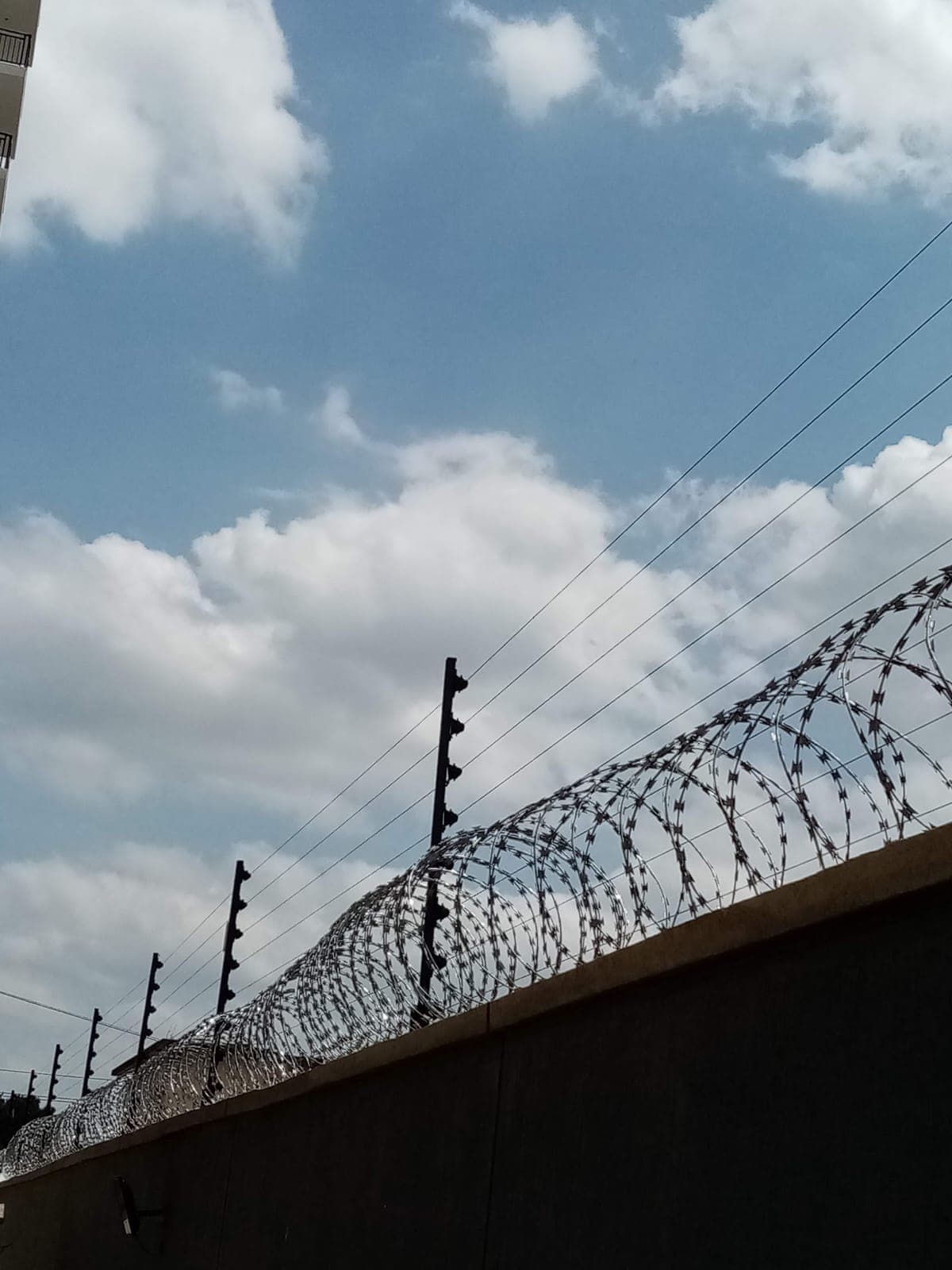
Good practice, and in many contexts an expectation under data protection principles, is to make it reasonably clear that a property is under CCTV surveillance, similar to the legally required signage for electric fences. A simple "CCTV in operation" notice at the gate is inexpensive, reduces disputes, and demonstrates transparency if a privacy concern is ever raised by a neighbour or a body corporate.
Bodies corporate and estate management rules
If you live in a managed estate or apartment complex, check the estate's own rules before installing a camera that captures any shared space. Many bodies corporate have their own policies on private CCTV facing common areas, separate from national data protection law, and getting this wrong can create a dispute with management even where the law itself would be on your side.
Retention and access
Keeping footage indefinitely, or allowing broad access to it, sits less comfortably with data protection principles than a defined retention period (the fourteen to thirty day window common on most residential NVR setups) with access limited to the property owner and, where relevant, security staff on a need-to-know basis. If footage is ever shared, for example handed to police investigating an incident, that's a legitimate and expected use. Sharing footage of a neighbour more broadly, for reasons unrelated to a genuine security incident, is a different matter and worth thinking about before doing it.
A practical rule of thumb
Point your cameras at your own property and genuinely shared access points. Angle away from private windows and yards that belong to someone else wherever your own coverage isn't compromised by doing so. Put up a sign. Keep retention reasonable. These four habits address the great majority of privacy concerns that come up in practice.
Book Free SurveyOur technicians factor camera angles and shared-boundary sensitivities into every site survey, particularly for apartment blocks and gated estates. See our CCTV surveillance service
Installing in a shared or managed compound?
Book a free site survey and we'll help you design camera coverage that protects your property without unnecessarily capturing your neighbours' private space.
Book Free Survey