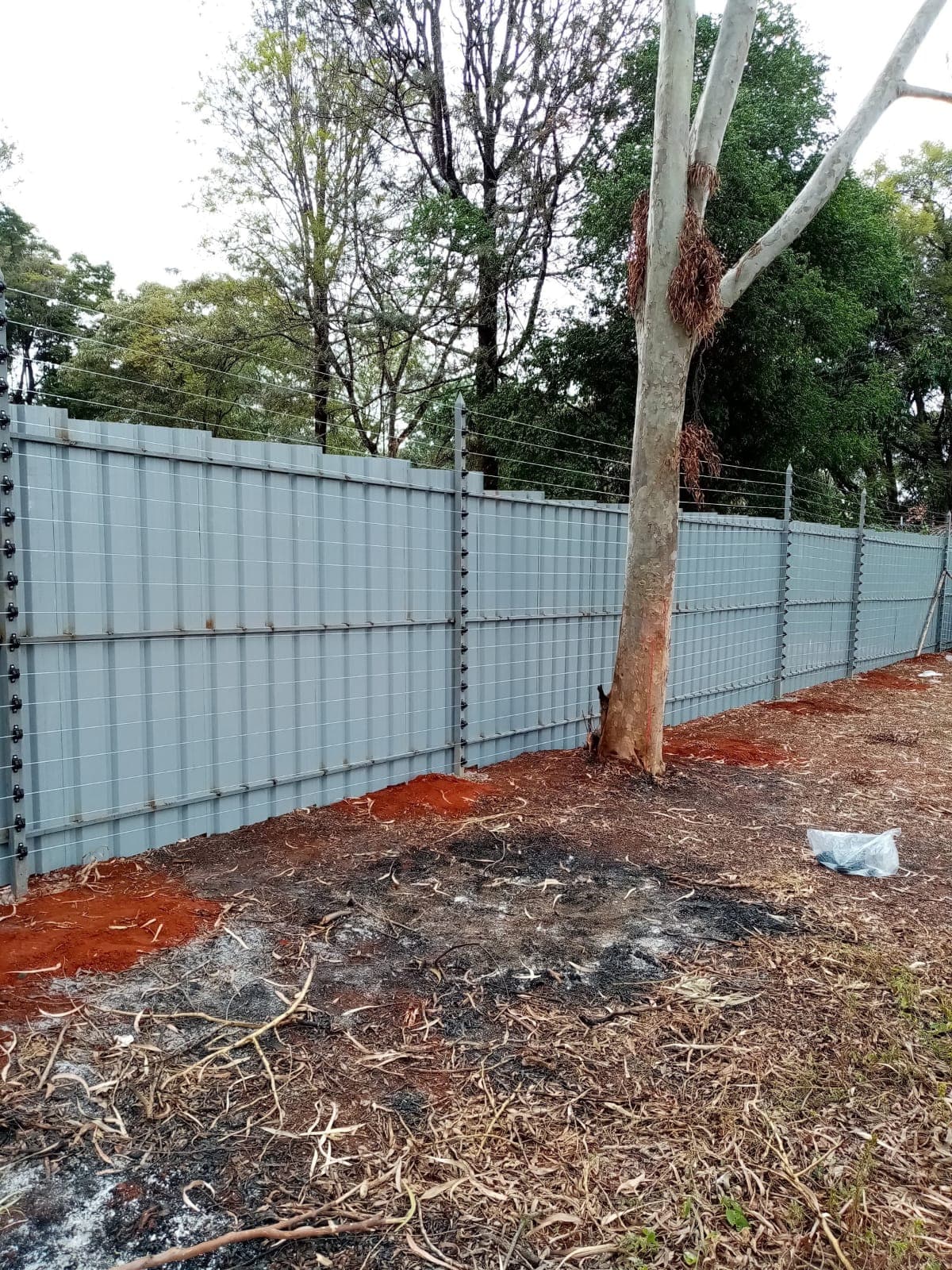
Electric fences have been around Kenyan compounds for decades, long enough for a healthy crop of misinformation to grow up around them. Some of it is harmless confusion. Some of it leads to people installing genuinely dangerous setups because they believed the wrong thing. Here are the five myths we hear most often, and the actual facts behind each one.
Myth 1: "Electric fences are lethal"
This is the big one, and it's the reason some people avoid electric fencing altogether in favour of razor wire alone. A correctly installed residential energizer, the kind fitted on a standard Nairobi perimeter wall, delivers a high-voltage pulse lasting a few thousandths of a second, repeated roughly once per second. The voltage is high but the energy content is deliberately tiny, which is what makes it painful rather than dangerous. It's the same principle behind an electric cattle prod: unpleasant, memorable, not lethal to a healthy adult.
What actually causes harm is not the fence design, it's a fence installed outside SANS 10222 limits: an oversized energizer meant for long farm runs fitted to a small compound, a badly earthed system, or a fence left touching another live circuit. That's an installation failure, not a property of electric fencing itself.
Myth 2: "Any energizer will do the job"
Energizers are not interchangeable. A 0.5 joule mains unit and an 18 joule commercial unit are built for completely different fence lengths and completely different levels of deterrence, and the joule rating (the pulse energy) has to be matched to your fence line length and the level of risk you're managing. Fit a farm-scale energizer to a small urban plot and you're overpowering the fence for no benefit and a real safety cost. Fit an undersized unit to a long fence run and the pulse arriving at the far end will be too weak to deter anyone, because voltage drops off over distance.
A competent installer sizes the energizer to your actual perimeter length and property type, not just whatever's cheapest or in stock. Our shop carries energizers from 0.5 joules up to 46,000-W commercial units across Nemtek, Stafix, and JVA, so sizing is a real conversation, not a guess.
Myth 3: "You don't really need earthing, the fence works fine without it"
This is the most dangerous myth on this list because it can look true for a while. A poorly earthed or unearthed fence can still deliver a pulse, so an installer or homeowner cutting corners on earthing might not notice a problem immediately. What earthing actually does is give the electrical pulse a safe, complete circuit back to the energizer. Without it, the pulse can seek an alternative path, and that's when energizers get damaged by their own output, fences deliver inconsistent shocks, or in worse cases, current ends up somewhere on the property it has no business being. A dedicated earth spike system, separate from your house's general electrical earth, is not an upsell. It's core to the system working safely at all.
Myth 4: "Electric fences stop working the moment power goes out"
Reasonable assumption, wrong in practice. Nearly every energizer installed on residential and commercial properties in Kenya today includes a 12V sealed lead-acid battery backup as standard, keeping the fence live for somewhere between 12 and 24 hours during a power cut, well past the length of a typical KPLC outage. For properties in areas with genuinely unreliable grid power or no mains connection at all, solar-powered energizers solve the problem entirely by never depending on the grid in the first place.
Myth 5: "Once it's installed, it just runs forever with no attention"
Electric fences are low-maintenance compared to most security systems, but not zero-maintenance. Vegetation grows into the wire and drains the pulse to earth through wet leaves. Wire tension loosens over time. Battery backups degrade after a few years and need replacing. Lightning strikes near the property can damage an energizer that has no surge protection fitted. None of this is a big job if it's checked periodically, but "install once and forget forever" is exactly how a good fence quietly stops doing its job.
The Pattern Behind All Five Myths
Notice that most of these myths point in opposite directions: some make electric fences sound more dangerous than they are, others make them sound more maintenance-free and forgiving than they are. Both extremes lead to bad decisions, either avoiding a genuinely effective deterrent out of unfounded fear, or installing one carelessly because it seemed too simple to get wrong. The truth sits in the middle: a correctly sized, correctly earthed, properly maintained electric fence is a safe, effective, low-drama piece of security equipment.
Have questions about your specific setup?
Talk to our technical team before you buy or install. We'll walk through joule sizing, earthing, and backup power for your actual property, not a generic answer.
Contact Us