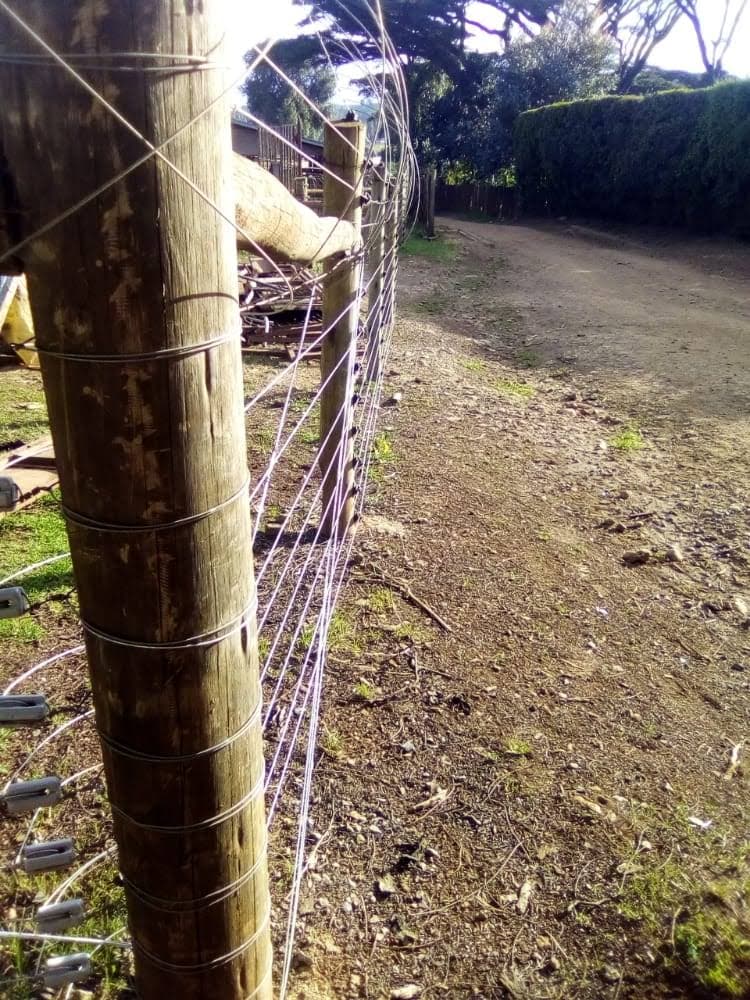
Every installer who has spent enough years on Kenyan compounds has a mental catalogue of things clients do to their electric fence after handover that would make an engineer wince. None of it comes from malice. It comes from a fence quietly fading into the background of daily life until it's just another part of the wall, treated with all the reverence of a washing line. Here's our field-tested list.
1. The Laundry Line Upgrade
It is a truth universally acknowledged that a freshly installed electric fence, running conveniently at chest height along a sunny stretch of wall, will eventually be mistaken for infrastructure by whoever does the household's laundry. We have seen shirts, kanga, and on one memorable occasion an entire duvet cover draped over a live strand to dry. Wet fabric against a live wire drains the pulse straight to earth, weakens the deterrent along that whole section, and can trip the energizer into thinking there's a fault. The fence is not offended by this. It simply stops working properly, quietly, without telling anyone.
2. The Accidental Bougainvillea Tunnel
Bougainvillea grows fast, grows thorny, and has an uncanny instinct for finding the exact gap between fence strands to grow straight through. Left unpruned for a season, it wraps itself around the wire, and wet leaves against a live strand behave exactly like wet laundry: they leak the pulse to ground. What was meant to be a hedge reinforcing the fence line becomes the reason the fence has gone soft right where the hedge is thickest. Regular trimming along the fence run isn't optional garden maintenance, it's part of keeping the security system functional.
3. Repainting the Danger Signs to Match the Gate
We understand the impulse. The compound gate got a fresh coat of forest green, and the bright yellow warning signs suddenly look like they belong to a different property. But those signs are not a design choice, they're a legal requirement under the standard every reputable fence is installed to, and painting over the wording (or removing them entirely because they're "not really needed, everyone knows it's electrified") quietly moves the property out of compliance. If the colour genuinely bothers you, order fresh signs rather than repainting the old ones into illegibility.
4. The DIY Zone Bypass
Multi-zone energizers exist so a homeowner can isolate one section, say, the section where the gardener needs to work, without killing the whole perimeter. Some households skip the keypad entirely and just disconnect a wire at the terminal block "for the afternoon," then forget to reconnect it before bed. A fence that's live everywhere except the one section nobody remembers to check is arguably worse than no fence at all, because it creates false confidence.
5. Treating the Energizer Box Like Extra Shelf Space
The energizer control box, mounted somewhere dry and accessible for servicing, has a way of accumulating things: a spare padlock, a paint tin, a stack of old newspapers waiting for the next fundraiser. None of this damages the unit directly, but it makes it much harder for a technician to actually get to the box during a service call, and stacking anything flammable near a unit that occasionally arcs at its terminals is not a great habit.
6. "It's Been Fine For Five Years, Why Would I Service It?"
This one isn't really funny, it's just the most common line we hear right before a service call that turns up a corroded earth spike, a battery backup that died two years ago and was never noticed because the mains never actually failed, or a lightning-damaged energizer quietly running at a fraction of its rated output. "Fine" and "actually working correctly" are not the same thing for a system that, by design, you're not supposed to be touching or testing yourself.
None of this is a lecture, every one of these is genuinely common and genuinely fixable. If your fence has picked up a few of these habits over the years, our technicians can bring it back to spec during a routine service visit. Check out our electric fence installation and maintenance service for what's included.
The Serious Bit, Briefly
The common thread across all six of these is the same: an electric fence works because it is left alone to do its job, kept clear of vegetation and laundry, kept signed, kept zoned correctly, and checked periodically. Most of what goes wrong with electric fences in Kenya isn't a manufacturing defect or a bad installer, it's a slow accumulation of small, well-intentioned household habits. A little awareness fixes most of it for free.
Time for a fence health check?
Book a service visit and we'll check earthing, output, zoning, and signage, and clear anything growing where it shouldn't be.
Book a Service