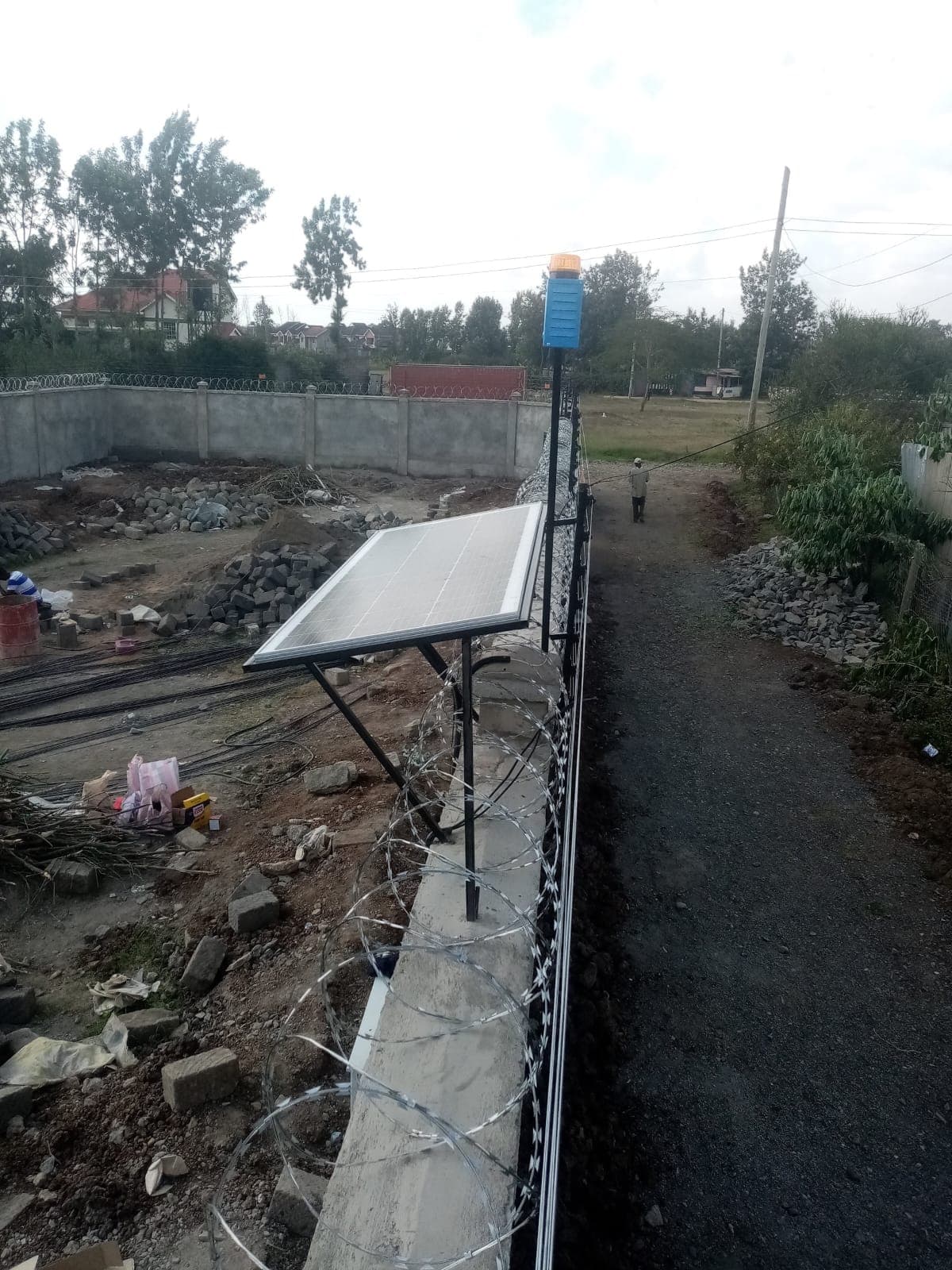
It's easy to reach for dramatic statistics when writing about security and solar demand in Kenya. We're deliberately avoiding that. What follows is grounded in patterns that are widely reported and observable, not invented numbers dressed up as market research.
Property Crime Concern Has Kept Security Spending a Priority
Property crime, ranging from opportunistic theft to more serious break-ins, remains a consistent concern for homeowners and business owners across Kenya's urban and peri-urban areas. This isn't a new phenomenon unique to any single year, but it has been enough of a sustained concern that CCTV and electric fencing have moved from being considered discretionary purchases for the wealthy to being treated as standard due diligence for anyone building or renovating a home, particularly in Nairobi's satellite towns where rapid development has outpaced some of the informal community security networks that older, more established neighbourhoods rely on.
The practical effect on installers like us is straightforward: enquiries increasingly come in as "what's the full security package" rather than "I just want cameras" or "I just want a fence." Buyers are thinking in layers earlier in the conversation than they used to.
Grid Reliability Concerns Are Real and Well Documented
Kenya Power outages, whether from planned maintenance, weather events, or grid faults, are a familiar frustration that doesn't need a citation to establish. What has changed is the cost of doing something about it. Solar panel prices and lithium battery prices have fallen substantially over the past several years as global manufacturing capacity, particularly for lithium iron phosphate cells, has scaled up. A solar backup system that would have been a luxury purchase a decade ago is now within reach of a much wider range of Kenyan households and small businesses.
Regulatory Context Around Electric Fencing
Electric fencing in Kenya is a legal and legitimate security measure, but it isn't unregulated. Reputable installers work to recognised technical standards covering energiser output limits, correct signage, and safe clearances from public areas, standards that exist specifically because badly installed fences have caused real injuries in the past. As awareness of these standards has spread, more buyers are asking installers directly what standard they build to, rather than assuming any fence with a working shock is automatically a safe and legal one.
Why This Pushes Buyers Toward Integration
When a property owner is already thinking about security and already thinking about power reliability, at roughly the same point in their decision timeline, purchasing both from a single supplier who understands how the systems interact has an obvious appeal over coordinating two or three separate contractors. It reduces the number of relationships to manage, the number of site visits, and the risk of one supplier's work interfering with another's, a solar installer drilling through a fence cable run being a common example of the kind of conflict that a single coordinated team avoids.
You can see the range of sectors we work across, security, solar, and shading, on our services overview which lists real installed pricing for each category rather than requiring a call just to see a number.
None of this means every property needs every system. It does mean that the old model of hiring a fence guy, then a solar guy, then a CCTV guy, each unaware of what the others installed, is becoming a less practical way to build out a property's infrastructure than it once was.
See how the sectors fit together on your property
Book a free site survey and we'll walk you through security, power, and shading as one coordinated plan, not three separate pitches.
Book Free Survey