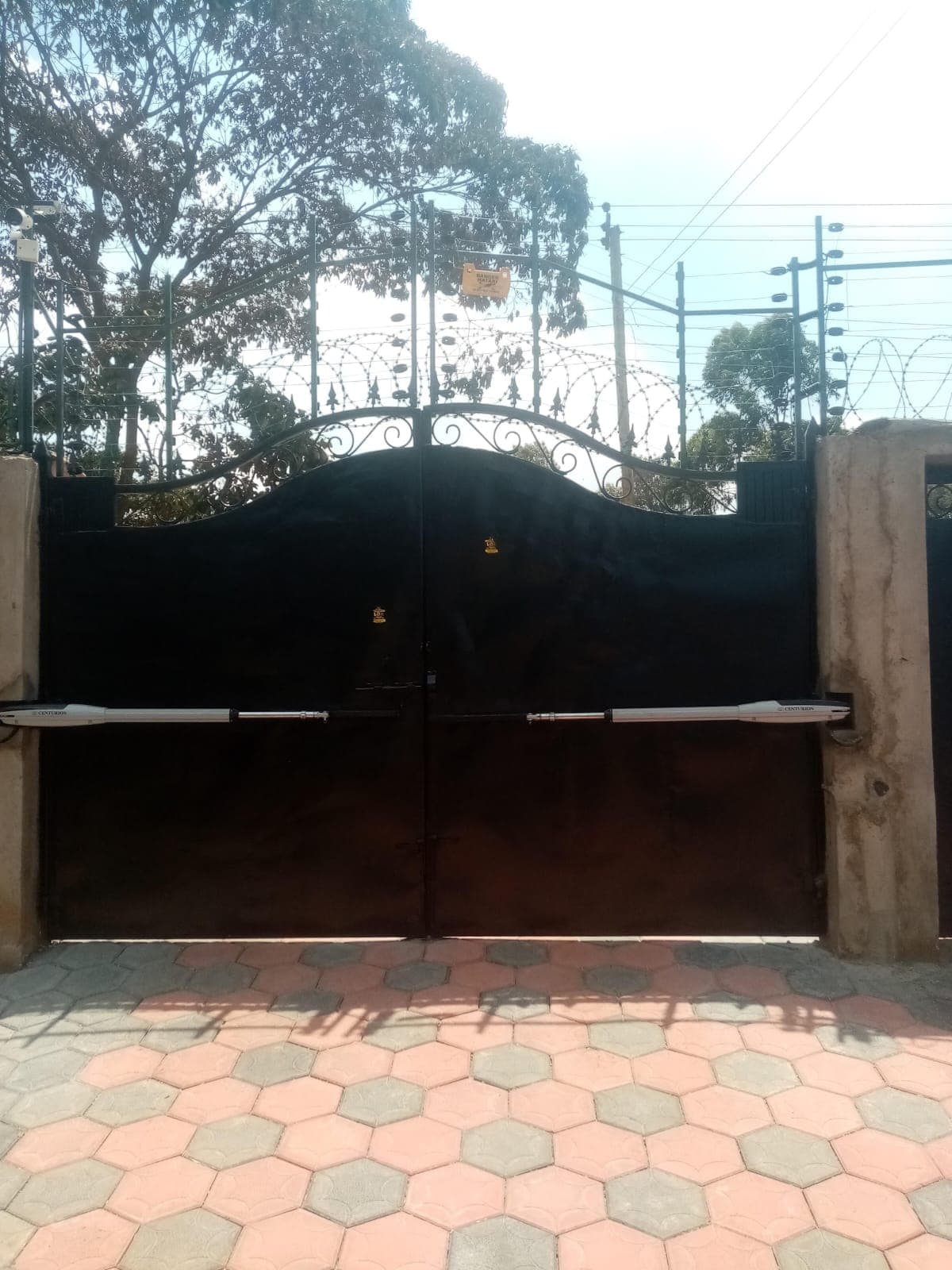
The scenario below is illustrative, a composite of situations installers across Kenya describe rather than a specific real event, but it is worth walking through carefully, because the stakes it describes are entirely real and the equipment decisions that prevent it are ordinary and affordable.
It is 9pm. Power has been out in the neighbourhood for two hours, a fairly routine outage. Inside a house at the end of a long driveway, a family member has collapsed and an ambulance has been called. It arrives at the gate eight minutes later. The gate motor, like the rest of the property, has no mains power. The gate does not move.
Where the Minutes Go
In a household with no battery backup on the gate motor and no one immediately available who knows where the manual release key is kept, the sequence that follows usually looks like this: someone runs from the house toward the gate, someone else searches for a key that has not been touched since installation day, and the ambulance crew waits on the road, unable to reach the driveway. In the worst versions of this story, a security guard or family member attempts to force the gate open manually without knowing the correct release procedure, risking damage to the motor or, worse, injury.
Every minute spent locating a key or trying to force a mechanism that was never designed to be forced is a minute an ambulance crew is not treating a patient.
What Backup Power and a Known Release Procedure Change
A gate motor fitted with battery backup, which every motor we install includes, keeps operating for several hours after a mains outage, meaning the remote or keypad simply works as normal and the entire scenario above never starts. That is the first and most important layer.
The second layer is the manual release key, provided with every installation specifically for the case where backup power has also been exhausted, most commonly after a multi-day outage. The key disengages the motor's drive mechanism so the gate can be pushed open by hand, cleanly and without damage, in a matter of seconds, provided someone in the household actually knows where it is kept.
- •Battery backup keeps the motor responsive to remote or keypad for several hours during an outage.
- •The manual release key is a mechanical fallback for when backup power is also exhausted.
- •Keeping the release key somewhere every adult in the household can find it, not locked away with the motor's spare parts, is what actually makes it useful in an emergency.
- •A gate that has been neglected for years (stiff chain, weak battery no longer holding charge) undermines both layers even if they were installed correctly at the start.
The Practical Lesson
None of the equipment involved here is exotic or expensive by the standards of a full gate automation package, a backup battery for a Centurion motor runs under KES 10,000. The failure in scenarios like this one is rarely equipment absence, it is equipment that was installed but never maintained, or a release key that nobody in the household could locate under pressure. Both are fixable in an afternoon.
Check your gate's backup power today
If you're not sure your gate motor has a working battery backup, or you don't know where the manual release key is kept, it's worth finding out before an emergency, not during one.
Book Free SurveyAutomated Gates service page Battery backup and manual override are standard on every Elatec gate installation.
Book a gate motor health check We inspect your existing battery, chain tension, and release mechanism.